Article II · The Campus · Clause 2.3
Five Hundred Seats Facing One Direction
The lecture theatre is one of American higher education's most legible building types — and one of its most constrained.
- Instrument
- Clause 2.3
- Filed under
- The Campus
- Schedules attached
- 2
- Reading
- 3 min
A Room With One Purpose
The anatomy theatre came first. The sixteenth-century Italian model — a steep wooden oval rising around a central table — solved a specific visual problem: how to let many bodies observe a single body. By the time American universities began building purpose-built lecture halls in the nineteenth century, that logic had already calcified into a set of formal requirements that persist today. Sightlines must converge on one point. Every seat must maintain a clear angle to that point. The floor must rise toward the back, because the human head, at standing height, is roughly nine inches tall and will block the view of anyone seated directly behind it.
The result is a room that cannot be argued with. The rake — the stepped or continuously sloping floor that lifts each row above the one before it — is not an aesthetic choice but a geometric one, calculated from the stage datum upward at an angle just steep enough to clear the sightline. In large halls, this means the rear rows sit fifteen or twenty feet above the lecturer's head, and the room acquires the section of a truncated pyramid. Architects working in the Collegiate Gothic or Georgian Revival idioms had to smuggle those stepped interiors into facades that suggested something older and less industrial.
Acoustics imposed a second set of constraints. Before electronic amplification arrived in the mid-twentieth century, the ceiling of a lecture hall did real work: a shallow concave vault could throw sound to the rear rows that a flat ceiling would lose. The geometry of the room had to balance reverberation long enough to fill the space against clarity sharp enough for speech. Too much reverb blurs consonants; too little makes the room feel dead. Nineteenth-century builders calibrated this through trial and material — hard plaster, wood panelling, upholstered seats that absorbed differently when occupied.
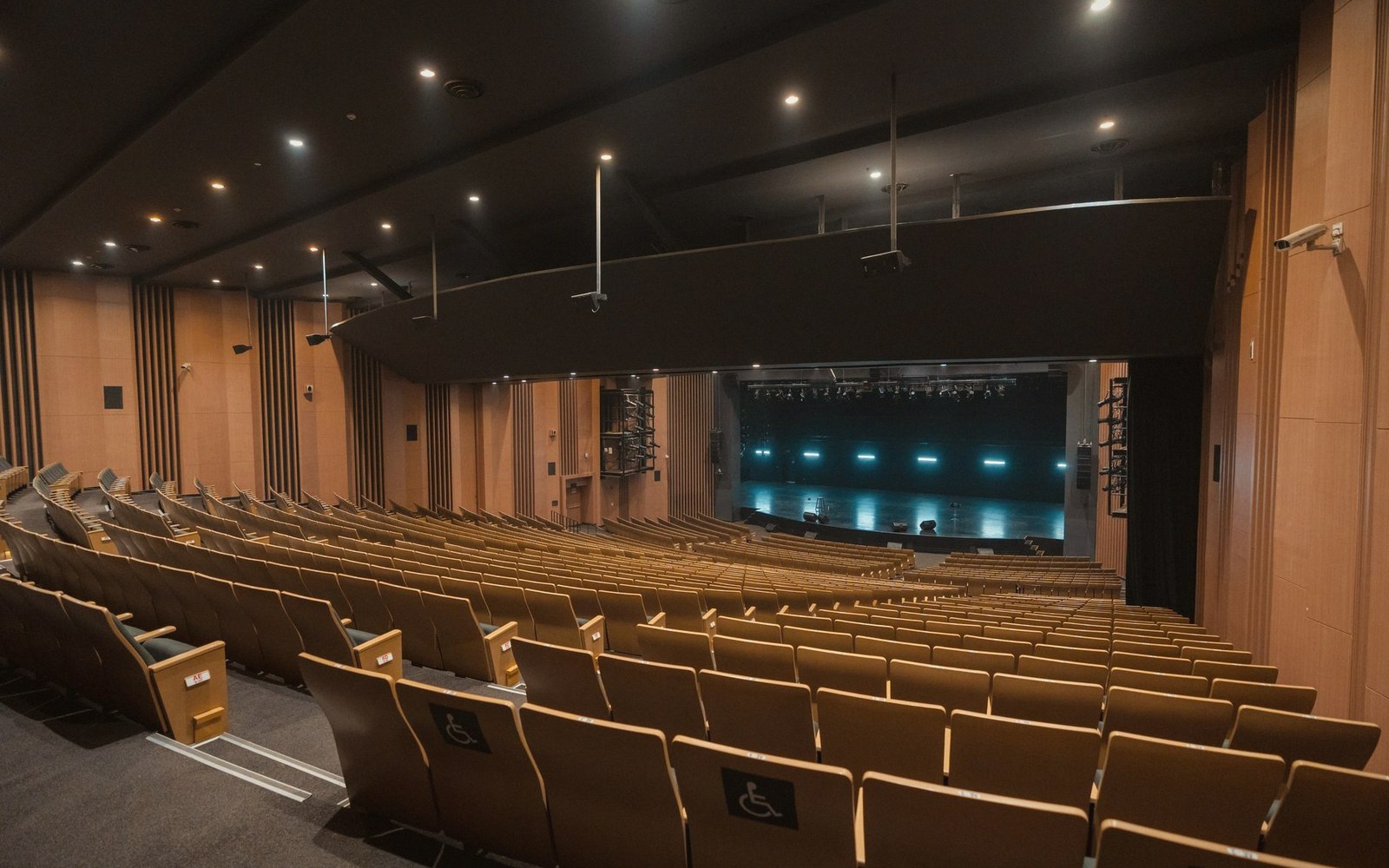
Contemporary halls have surrendered much of this embedded intelligence to technology: suspended speaker arrays, adjustable baffles, digital delay. What they have not changed is the fundamental arrangement — rows of fixed seating facing a single focal wall. The room still insists that attention flows in one direction. Five hundred seats, all pointing the same way, remain architecture's most literal argument about how knowledge moves.
Also in The Campus
Related clauses